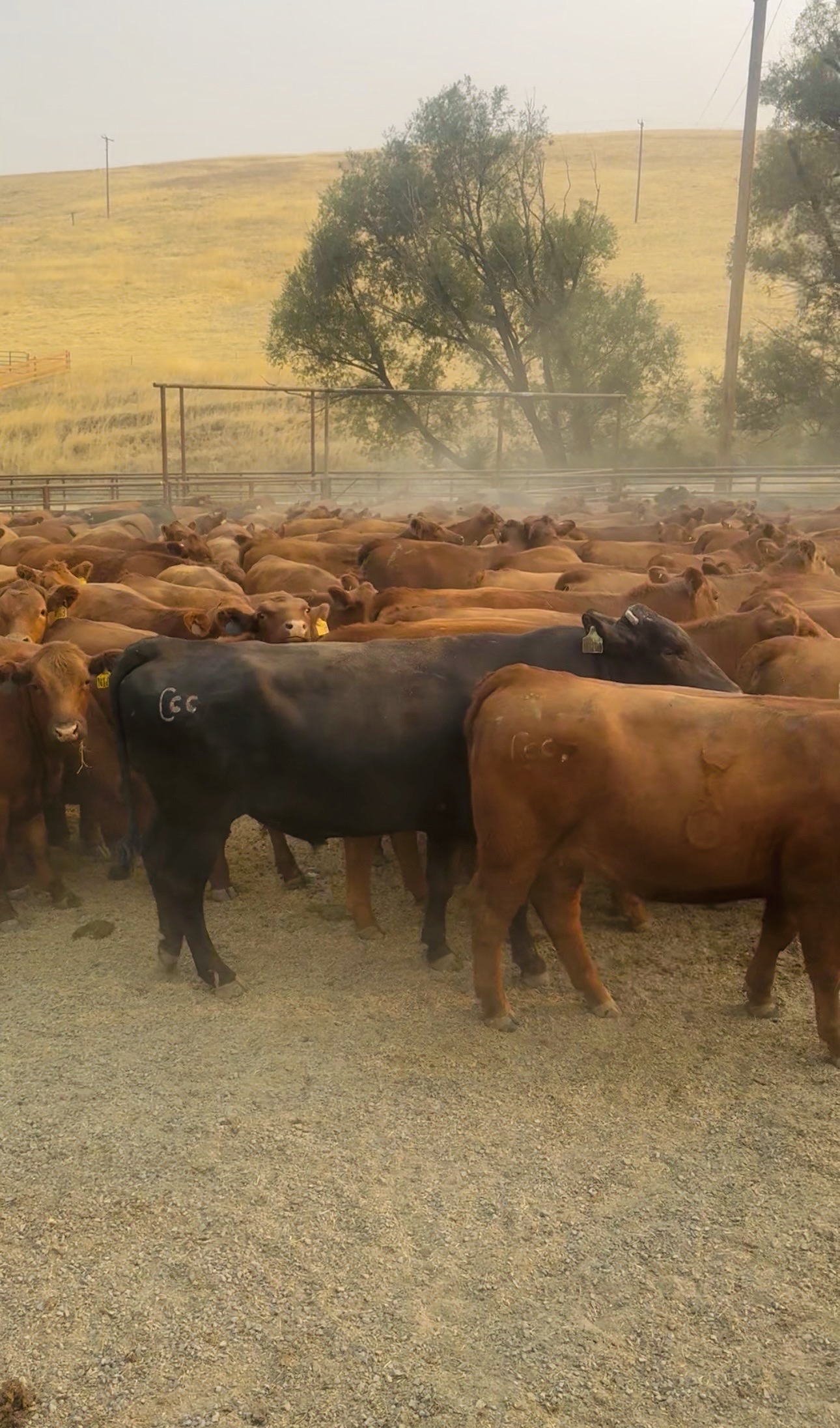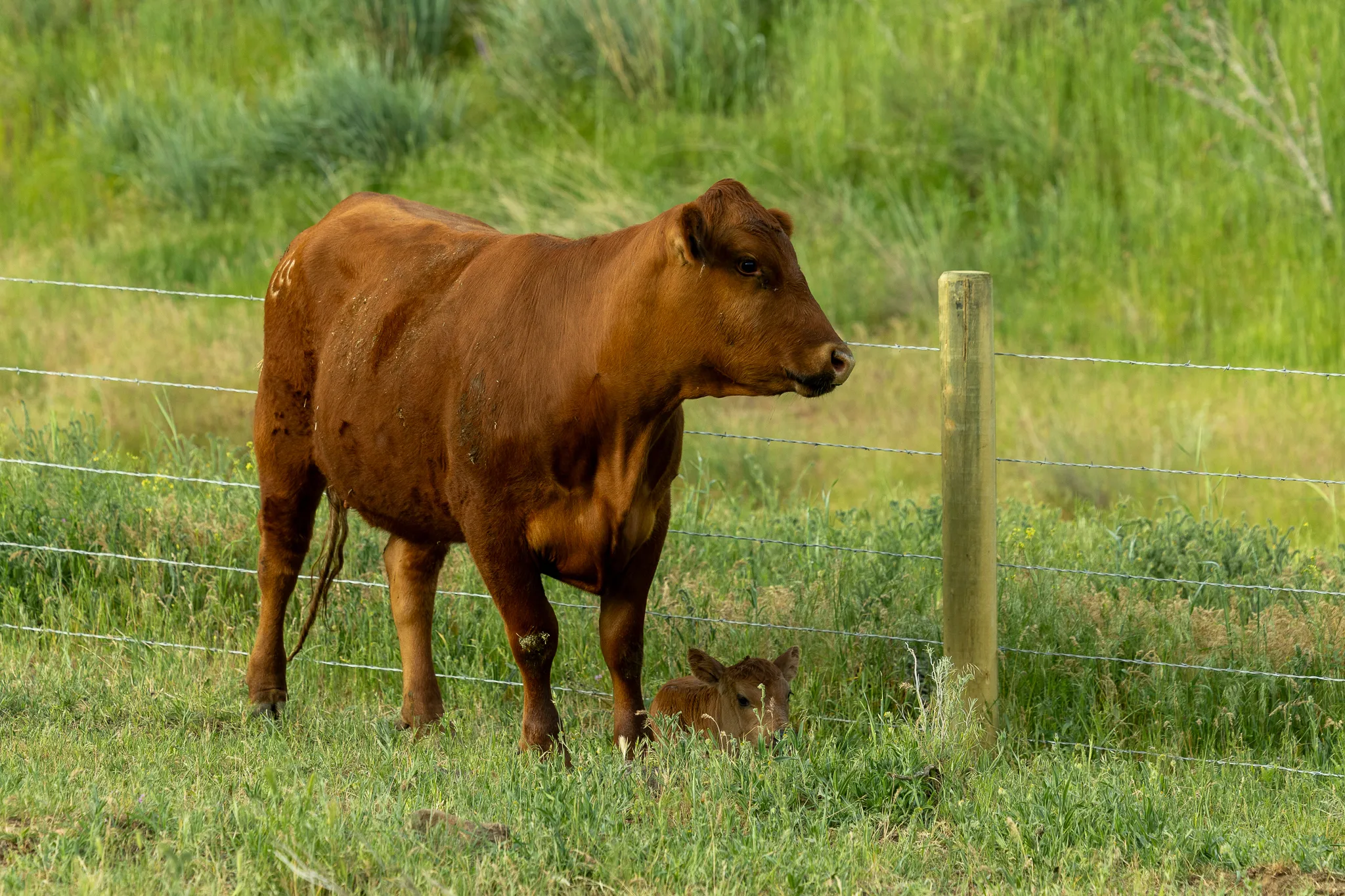
Century Cattle Co. runs Red Angus. The breed was selected for the heat here in the Snake River breaks, for its carcass and maternal traits, and for the quality of the data the breed association collects.
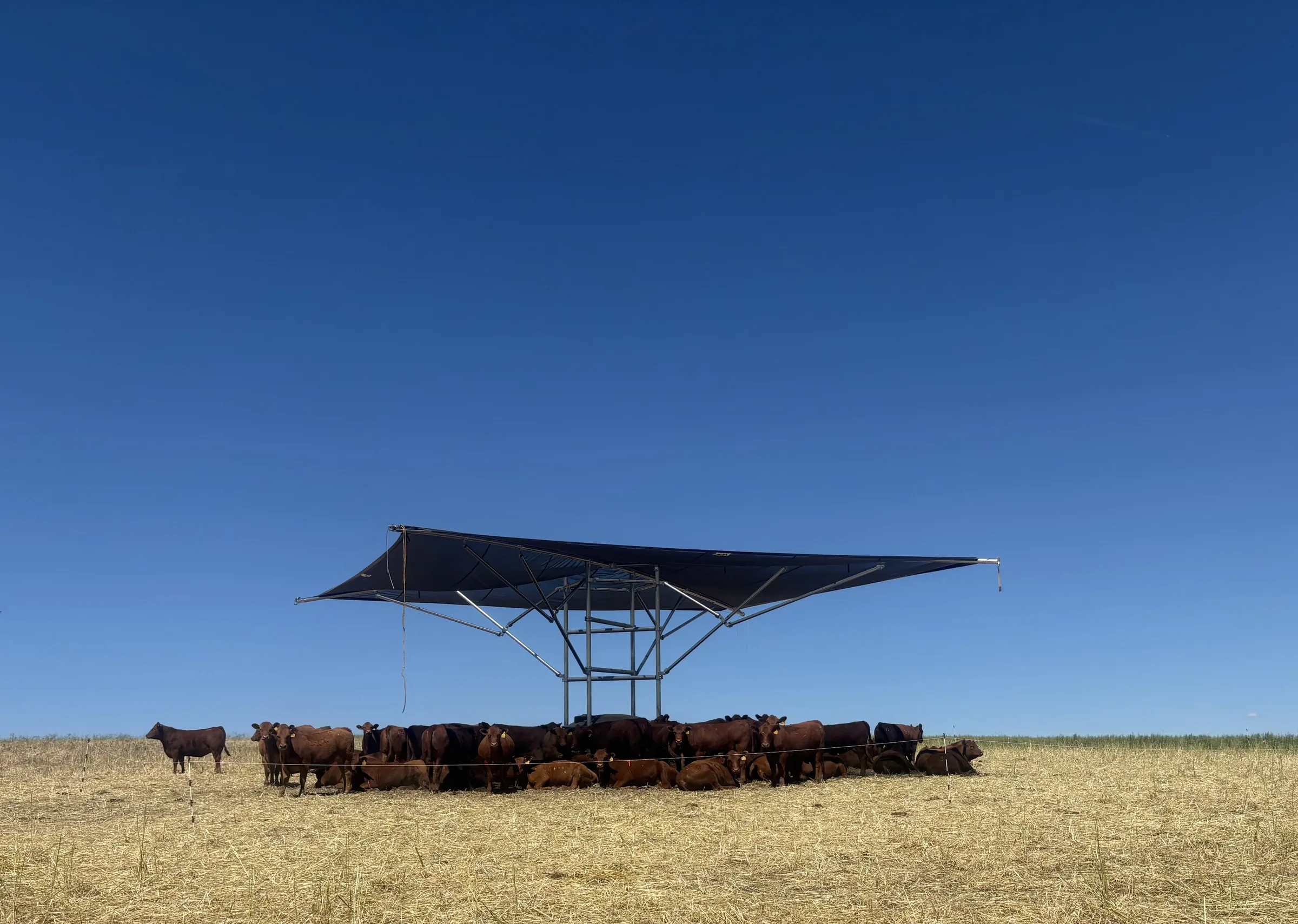
The ranch sits in the Snake River breaks and generally runs five to ten degrees hotter than the Palouse country next to it. Our cattle graze open ground through the summer. Red-hided cattle tolerate that heat better than black-hided cattle, and across a full season the difference shows up as body condition. Body condition affects breed-back rates and calf performance. When we asked which breed fit this ranch, heat tolerance was the deciding factor.
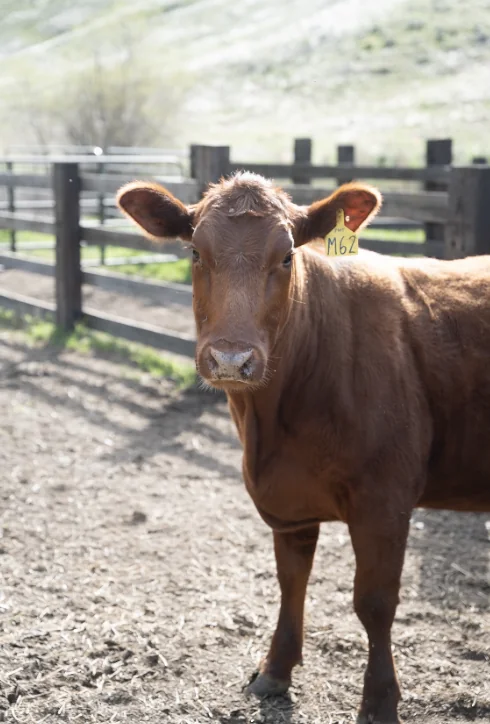
Red Angus carries the same carcass quality and maternal traits that made Angus the industry standard. Black Angus is more common and easier to source, which is a real advantage we chose to give up.
The Red Angus Association requires purebred producers to report their entire calf crop. Where reporting is optional, producers tend to submit the animals that performed well, which pulls the reported breed average above the actual one. Mandatory whole-herd reporting means the published numbers describe the full population rather than a selected sample.
Red Angus females also work across a range of environments and hold up better in heat than black cows, which matters on ground that runs hotter than the country around it. That flexibility was part of the decision.